GVM Auctioneers · Property tax guide
Capital Gains Tax When Selling a House in Ireland: A 2027 Guide for Sellers

The short answer
Do you pay capital gains tax when you sell a house in Ireland?
If you’re selling the home you’ve always lived in, you almost certainly won’t pay capital gains tax (CGT). If you’re selling a rental property, a holiday home, an inherited house or land, you probably will.
For most property disposals in 2027, the CGT rate is 31%. Development land remains subject to the 33% rate.
Important: This article is general information, not tax or legal advice. Tax rules change and every sale is different. Talk to an accountant, tax adviser or your solicitor before you sell.
This guide explains how capital gains tax works on property in Ireland in 2027. It covers the current rate, the main exemptions, how to calculate CGT with a worked example, payment dates, and legal ways to reduce your bill.
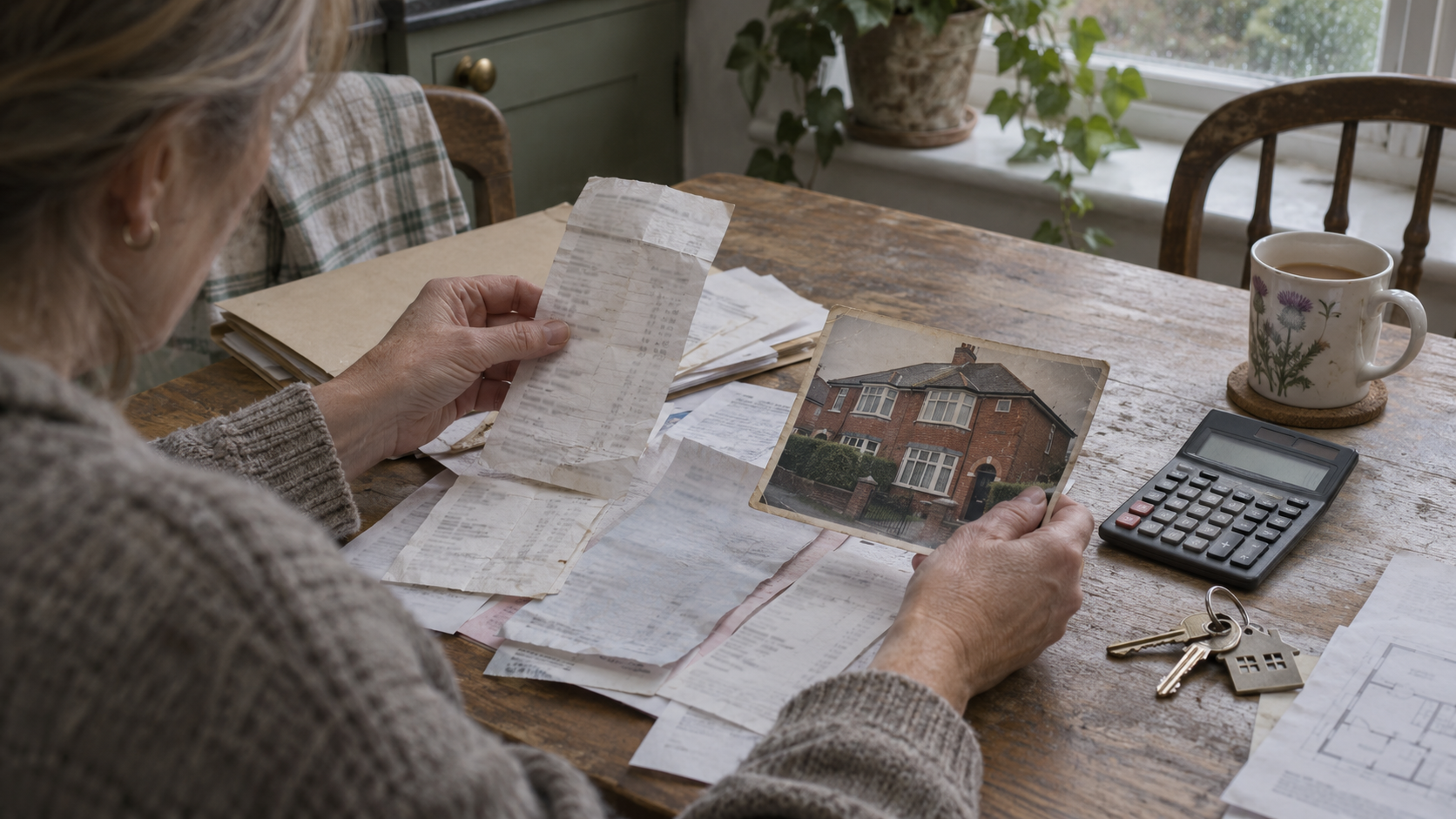
Understanding the tax
What is capital gains tax, and what’s the rate in 2026?
Capital gains tax is a tax on the profit you make when you sell, gift or transfer an asset, such as a house or land. You pay it on the gain, not on the whole sale price. Each person also gets a €1,270 personal exemption every tax year.
| Disposal date | CGT rate on most property | Development land |
|---|---|---|
| 6 December 2021 – 6 October 2026 | 33% | 33% |
| From 7 October 2026 onwards | 31% | 33% |
What the 2027 CGT rules mean for sellers
- The date that counts: This is usually the contract date, not the closing date. The 31% standard rate applies to disposals made on or after 7 October 2026, including property sales in 2027.
- Development land: The rate remains 33%. If you’re selling land with development potential, the higher rate may apply.
- Annual exemption: The €1,270 annual exemption remains available to each individual for each tax year.
- Check before completion: Tax rules and Revenue guidance can change. Ask your accountant, tax adviser or solicitor to confirm the rate and treatment that applies to your disposal.
Principal Private Residence relief
Capital gains tax exemptions: when you don’t pay CGT on a house
The biggest exemption for homeowners is Principal Private Residence (PPR) relief. If the house was your only or main home for the whole time you owned it, there’s no CGT to pay.
What PPR relief covers
- Your home and up to one acre of land around it (0.405 hectares, not counting the site of the house). Land above one acre doesn’t qualify.
- The last 12 months of ownership always count as time you lived there, even if you had already moved out.
- Some time away still counts, including up to four years when your employer required you to live elsewhere, time working in a job with all duties outside Ireland, and time in hospital, a nursing home or a fee-paying retirement home.
When you only get partial relief
- You rented it out or didn’t live there for part of the time. Relief applies only to the years you lived there, plus the qualifying periods above.
- You used part of the house for business. If one-fifth was a home office used only for business, you get relief on four-fifths of the gain. Taking in a lodger under Rent-a-Room relief doesn’t affect your PPR relief.
- The property has development value. Relief covers only its value as a home, not the extra value from development potential.
Other ways a gain can be reduced to zero
- The €1,270 personal exemption each tax year.
- Losses from other disposals in the same year, or carried forward from earlier years.
- Transfers between spouses or civil partners, which are generally free of CGT.
Even if PPR relief means no tax is due, Revenue says you must still file a CGT return for the sale.
Worked example
How to calculate capital gains tax on property in Ireland
CGT is the sale price, minus what you paid and your allowable costs, minus the €1,270 exemption, multiplied by the applicable rate.
Worked example: Aoife bought a rental apartment in Limerick in 2015 for €180,000. She paid €4,000 in stamp duty and legal fees, and later spent €20,000 on an extension. She signs the contract to sell it in November 2027 for €320,000, and pays €6,500 in auctioneer and solicitor fees.
| Sale price | €320,000 |
|---|---|
| Less selling costs: auctioneer and solicitor | −€6,500 |
| Less purchase price | −€180,000 |
| Less buying costs: stamp duty and legal fees | −€4,000 |
| Less improvements: extension | −€20,000 |
| Chargeable gain | €109,500 |
| Less personal exemption | −€1,270 |
| Taxable gain | €108,230 |
| CGT at 31% | €33,551.30 |
At the previous 33% rate, Aoife would have paid €35,715.90. The 31% rate produces a saving of €2,164.60 on this illustrative taxable gain.
The figures here are illustrative. If you’ve owned the property since before 2003, you may also be able to claim indexation relief, which adjusts the purchase price for inflation. Your accountant can work out the exact figure for your sale.
Keep your paperwork
Allowable costs that reduce your gain
Every allowable cost you can prove lowers your tax bill. Revenue allows three main types of costs connected with acquiring, improving and selling the property.
| Type of cost | Examples | Usually allowed? |
|---|---|---|
| Buying costs | Stamp duty, solicitor’s fees, surveyor’s fees when you bought | Yes |
| Improvements: enhancement expenditure | Extensions, attic conversions, a new conservatory | Yes, if it added value and is still there when you sell |
| Selling costs | Auctioneer or estate agent fees, solicitor’s fees, advertising | Yes |
| Repairs and maintenance | Painting, fixing the boiler, replacing broken windows | No, usually not |
| Mortgage interest | Interest on a loan to buy the property | No |
Keep your paperwork. Invoices, receipts, contracts and statements are your proof. Without them, a cost may not be allowed.
Inheritance, gifts and valuations
Capital gains tax on inherited and gifted property
When you sell an inherited house, CGT is charged only on the rise in value since you inherited it, not since the original owner bought it. Revenue uses the property’s market value on the date you inherited it as your starting price.
That makes the valuation at the time of inheritance very important. A probate valuation from a qualified local valuer gives you a clear, defensible starting figure. If you sell soon after inheriting, the gain is often small.
Gifts work differently. If you give a property to someone other than your spouse or civil partner, Revenue treats it as sold at market value. You may owe CGT even though no money changed hands.
Inheritances and gifts may also be liable to capital acquisitions tax (CAT), which is a separate tax. The CAT rules and thresholds are separate from CGT, so ask your tax adviser to confirm the threshold and date that apply to the gift or inheritance you are dealing with in 2027.
Selling an inherited home? GVM carries out probate valuations across Limerick.
Payment and filing
When and how to pay capital gains tax
You pay CGT in the same tax year as the sale, or by 31 January for a December sale, and file the return by 31 October of the following year. For a 2027 disposal between 1 January and 30 November, payment is generally due by 15 December 2027 and the return by 31 October 2028. For a December 2027 disposal, payment is generally due by 31 January 2028 and the return by 31 October 2028. The deadlines depend on the date of disposal, which is usually the contract date.
| If you sell between | Pay CGT by | File your return by |
|---|---|---|
| 1 January and 30 November | 15 December of the same year | 31 October of the following year |
| 1 December and 31 December | 31 January of the following year | 31 October of the following year |
How to pay: Register for CGT and pay online through Revenue’s myAccount or ROS. Depending on your situation, you’ll file using Form 11, for self-employed and non-PAYE income, or Form CG1. Late payment adds interest, and a late return adds a penalty.
For higher-value sales
CG50 clearance certificate
If you sell a house or apartment for more than €1 million, you’ll need a CG50A clearance certificate from Revenue. Without one, the buyer must keep back 15% of the price and pay it to Revenue.
For other assets, including land, the threshold is €500,000. Your solicitor will usually apply for the certificate online on your behalf.
Legal tax planning
How to reduce capital gains tax in Ireland legally
You can’t avoid CGT on a gain that’s due, but you can make sure you don’t pay more than you have to:
- Claim every allowable cost. Stamp duty, legal fees, improvements, and auctioneer and solicitor fees when you sell all reduce your gain.
- Check your PPR relief. If you lived in the property at any point, you may get partial relief. Remember that the last 12 months always count.
- Use your €1,270 exemption. If you co-own the property with your spouse or partner, each of you has your own exemption.
- Use losses. A loss on another asset in the same year, or carried forward, can be set against the gain.
- Think about timing. The 31% standard rate applies to disposals made from 7 October 2026 onwards. If you have more than one property to sell, spreading sales over different tax years may allow you to use more than one annual exemption.
- Get the valuation right. For inherited property, an accurate market value at the date of inheritance sets your starting price.
- Ask about specialist reliefs. Farmers and business owners selling land or business property may qualify for reliefs such as retirement relief. These have strict conditions, so get advice early.
Talk to an accountant or tax adviser before you agree a sale. Some of these options need planning months in advance.
Answers for sellers
Frequently asked questions
What is the rate of capital gains tax in Ireland?
The standard rate is 31% for most disposals made on or after 7 October 2026, including disposals in 2027. Development land remains subject to the 33% rate.
Do I pay capital gains tax when I sell my home in Ireland?
Not usually. If it was your only or main home for the whole time you owned it, Principal Private Residence relief means no CGT is due. You still need to file a return.
How do I calculate capital gains tax in Ireland?
Take the sale price, subtract selling costs, the purchase price, buying costs and improvements, then subtract the €1,270 personal exemption. Multiply what’s left by 31%.
What are the capital gains tax exemptions in Ireland?
The main ones are PPR relief on your home, the €1,270 annual personal exemption, and transfers between spouses or civil partners. Losses can also be set against gains.
Do I pay CGT on an inherited house?
Only on any rise in value since you inherited it. Your starting price is the market value on the date of inheritance.
When do I pay CGT after selling a property?
For sales between 1 January and 30 November, pay by 15 December. For December sales, pay by 31 January. File your return by 31 October of the following year.
Do I pay CGT on a rental property in Ireland?
Yes, usually. Rental property doesn’t qualify for PPR relief unless you also lived there, in which case you may get partial relief.
Thinking of selling?
Start with an accurate valuation
Every CGT calculation starts with the right number: what your property is worth today, and what it was worth when you got it. GVM has been valuing and selling property across Limerick since 1956. We offer free sales valuations and formal probate, tax and legal valuations.
Book your free valuation, or call our Limerick City office on (061) 413522 or our Kilmallock office on (063) 98555.
Need a property valuation?
Get a reliable figure before you sell.
Speak to GVM’s valuation team about your property.
This 2027 guide is general information based on Revenue guidance available when it was updated in November 2026. It is not tax, legal or financial advice. Tax rules can change, so please get professional advice for your own situation before selling, gifting or transferring property.
Sources
- Revenue: How to calculate CGT
- Revenue: When and how to pay and file CGT
- Revenue: Principal Private Residence relief
- Revenue: Selling a house
- Revenue: CG50A clearance certificate
- Citizens Information: Budget 2027
- Walkers: Ireland Budget 2027 tax highlights
- KPMG: Ireland tax measures in 2027 budget